How B2B SaaS CMOs Buy Software in 2026
Our annual survey of SaaS CMOs shows how the rules of B2B software buying have changed.
Want articles like this straight to your inbox?
Subscribe here
Subscribe here


Software vendors still plan around search and sales-led discovery. But CMOs increasingly build shortlists in AI tools and peer communities before a seller knows the account is active.
This report shows where discovery started for the 101 B2B SaaS CMOs in the sample, what earned consideration, and what an educated buyer needed from vendor content and the first sales conversation.
This report presents findings from Wynter's third annual survey on how B2B SaaS CMOs buy software. We surveyed 101 CMOs from mid-market B2B SaaS companies, asking 14 open-ended questions about their vendor discovery, evaluation, and purchasing processes.
Percentages from coded open-ended answers describe this sample of 101 CMOs. They are not estimates for every B2B buyer. Ranking results use weighted positions only where the question and calculation state that method. Treat annual comparisons as directional until question wording, sample filters, and coding rules are confirmed as comparable.
This represents a 3.5x increase in just 12 months. In our 2025 report, we predicted AI usage would "more than double." It tripled.
But the real story isn't just adoption — it's when AI enters the buying process. 68% of CMOs now start their searches with AI tools before traditional search engines. They're asking ChatGPT and Perplexity to map the category landscape before they ever type a query into Google.
LLM recommendations now rank #4 in consideration factors — ahead of Google research, supplier content, supplier ads, and cold outreach. The tools mentioned most frequently: ChatGPT, Claude, and Perplexity.

Vendor implication: Publish clear category and problem language. Put comparison evidence, methodology, and proof on public pages that buyers and AI systems can verify. Use specific claims with named sources and dates. Prompt tricks cannot compensate for vague or unsupported public evidence.
This isn't new — peer recommendations have always mattered. What's changed is the scale and infrastructure. Private communities have become the de facto buyer guides for B2B software.
65% of CMOs start their vendor searches in peer communities.
Meanwhile, cold outreach ranked dead last. Only 2% ranked it #1.
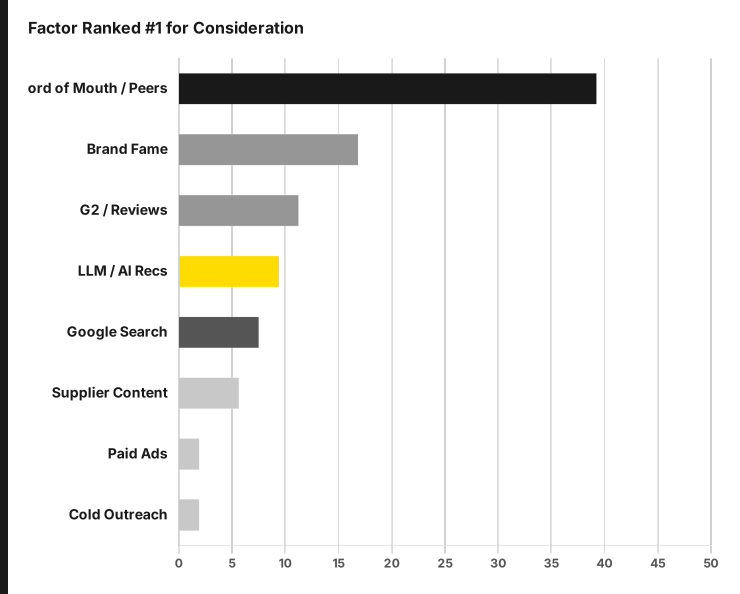
Discovery is not the same as consideration. A private recommendation can put a vendor on the list, but the buyer still needs evidence that the product fits the problem and risk profile. Earn advocacy through product outcomes, then give customers specific, defensible proof they can repeat without scripted promotion.
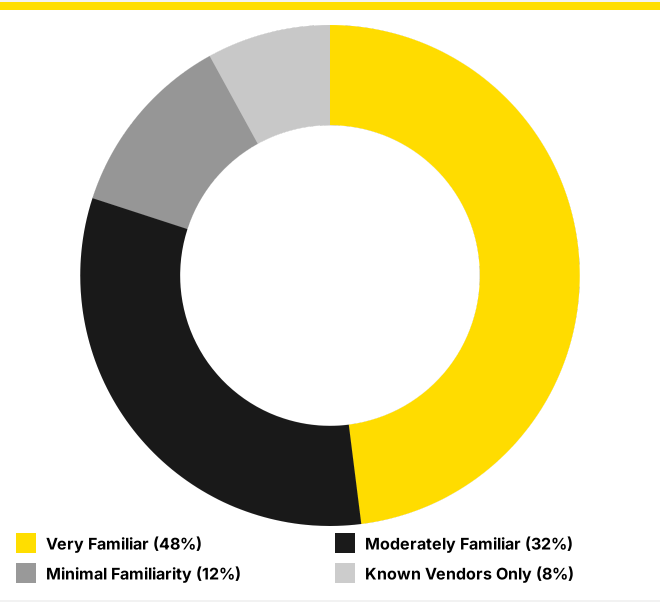
The "very familiar" segment more than doubled in one year. This isn't incremental change — it's a fundamental shift in buyer behavior.
Use the first call to validate:
The website should answer repeatable questions before the meeting. The call should confirm fit, exceptions, risk, and next steps.
Methodology labels: Read the following details as collection, coding, ranking, sample, and field date. Headline percentages use the stated sample unless another denominator is shown.
All responses were collected using Wynter's Target Customer Survey product. Unlike typical surveys with pre-set multiple choice options, we asked open-ended questions and thematically coded responses — counting how many respondents mentioned each theme, then calculating percentages. Ranking questions were weighted by position. This approach captures authentic buyer language and behaviors rather than forcing responses into predetermined categories.
Sample: 101 B2B SaaS CMOs from mid-market companies ($50M+ revenue). Survey conducted January 2026.

Software vendors still plan around search and sales-led discovery. But CMOs increasingly build shortlists in AI tools and peer communities before a seller knows the account is active.
This report shows where discovery started for the 101 B2B SaaS CMOs in the sample, what earned consideration, and what educated buyers needed from vendor content and the first sales conversation.
This report presents findings from Wynter's third annual survey on how B2B SaaS CMOs buy software. We surveyed 101 CMOs from mid-market B2B SaaS companies, asking 14 open-ended questions about their vendor discovery, evaluation, and purchasing processes.
Percentages from coded open-ended answers describe this sample of 101 CMOs. They are not estimates for every B2B buyer. Treat annual comparisons as directional until question wording, sample filters, and coding rules are confirmed as comparable.
This represents a 3.5x increase in just 12 months. In our 2025 report, we predicted AI usage would "more than double." It tripled.
But the real story isn't just adoption — it's when AI enters the buying process. 68% of CMOs now start their searches with AI tools before traditional search engines. They're asking ChatGPT and Perplexity to map the category landscape before they ever type a query into Google.
LLM recommendations now rank #4 in consideration factors — ahead of Google research, supplier content, supplier ads, and cold outreach. The tools mentioned most frequently: ChatGPT, Claude, and Perplexity.
Vendor implication: Publish clear category and problem language. Put comparison evidence, methodology, and proof on public pages buyers and AI systems can verify. Prompt tricks cannot compensate for vague or unsupported evidence.
This isn't new — peer recommendations have always mattered. What's changed is the scale and infrastructure. Private communities have become the de facto buyer guides for B2B software.
65% of CMOs start their vendor searches in peer communities.
Meanwhile, cold outreach ranked dead last. Only 2% ranked it #1.
Discovery is not consideration. A private recommendation can put a vendor on the list, but the buyer still needs evidence that the product fits the problem and risk profile. Earn advocacy through outcomes and defensible proof customers can repeat.
The "very familiar" segment more than doubled in one year. This isn't incremental change — it's a fundamental shift in buyer behavior.
Use the first call to validate problem fit, differentiation, implementation risk, proof, pricing, and next steps. The website should answer repeatable questions before the meeting.
All responses were collected using Wynter's Target Customer Survey product. Unlike typical surveys with pre-set multiple choice options, we asked open-ended questions and thematically coded responses — counting how many respondents mentioned each theme, then calculating percentages. Ranking questions were weighted by position. This approach captures authentic buyer language and behaviors rather than forcing responses into predetermined categories.
Sample: 101 B2B SaaS CMOs from mid-market companies ($50M+ revenue). Survey conducted January 2026.
.png)
.png)


